3 Useful Accessibility Aids I Use Daily As a Disabled Person in Chronic Pain
I wish I’d done these sooner instead of struggling for so long
If you buy through our links, we may earn a small fee at no extra cost to you

Regaining my independence of movement has increased by quality of life ten-fold. Stock photo: Unsplash
This article is based on personal experience and general pain science education. It is not medical advice and is not a substitute for care from your doctor.
It can be hard to accept that you have grown to need mobility aids, and I know this from personal experience. I was not always disabled or in need of such items to get through the day independently. But now, as my connective tissue disease progresses, I have three vital tools that help me daily with mobility, managing pain, preventing injury and generally making life easier.
Your mobility aids are as necessary as another person’s shoes for walking. These aids help us do daily tasks and are meant for all who need them, regardless of diagnosis, age or any other factor. There is no moral value or anything to feel guilty about. If you need it, get it, and don’t give that little voice of niggling doubt any further consideration.
Here I share the three most vital aids I started with, along with recommendations on where to start your search and find the right aids for you.
1. A Sturdy, Non-Slip Shower Seat
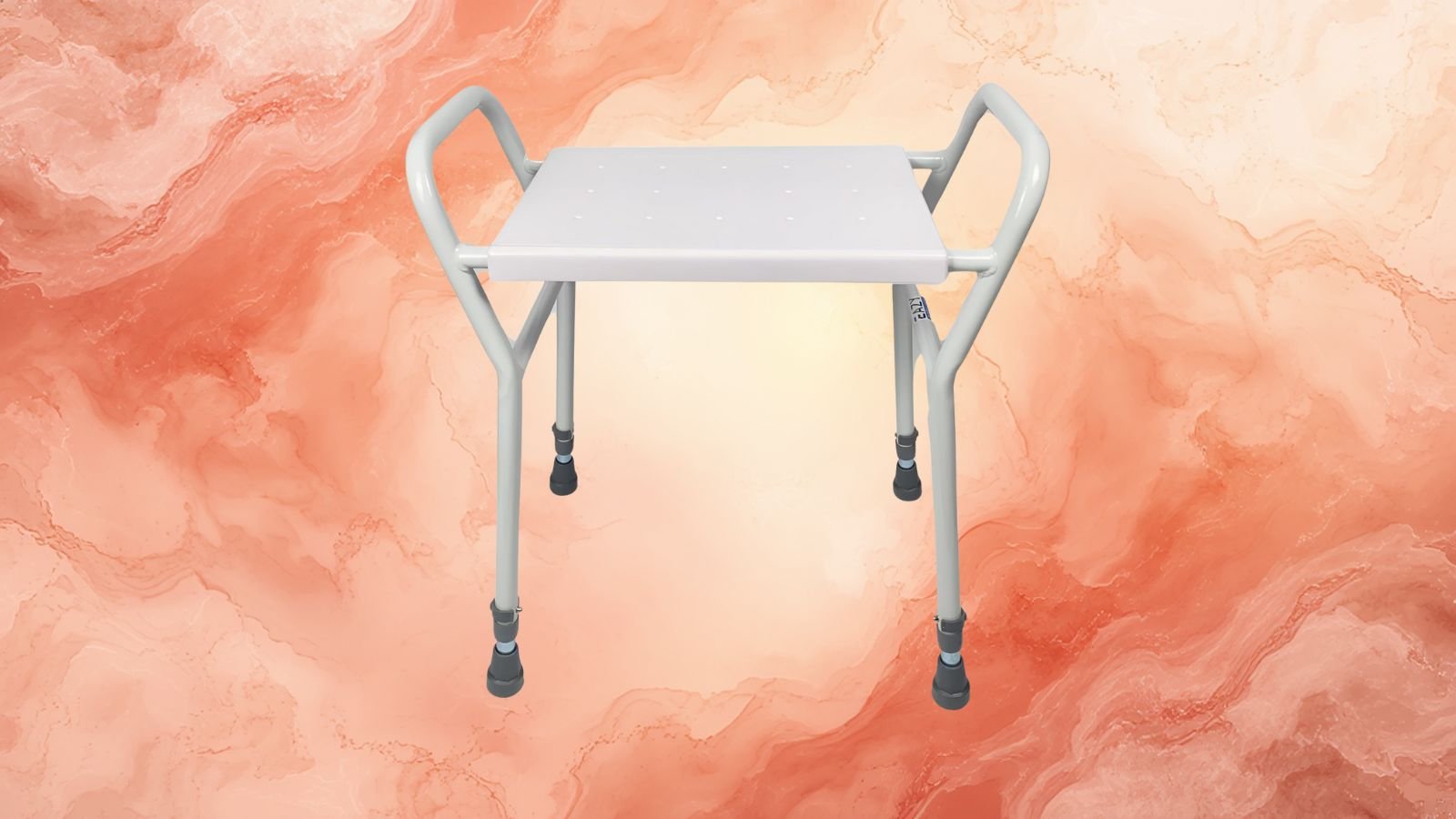
Having this shower stool has made bathing accessible again, with less pain and recovery time needed. Photo: Living In Pain
If showering has become too hard to manage safely, a sturdy shower seat can make a big difference in both comfort and safety when showering. Getting mine, which is available from Amazon, has been by far one of the most helpful mobility aids I’ve embedded into my life.
This was the first item I bought myself that transformed this task, which had started to feel impossible.
Due to my autonomic dysfunction, low blood pressure is my constant, unwelcome companion. When you add heat and standing to the mix, I feel hot and nauseous, my heart races, the world starts spinning, and I cannot usually stand for longer than about 90 seconds.
If I push beyond that, my SI joint can start to slip out of place. That is a partial dislocation, known as a subluxation, which is common with the hypermobile Ehlers-Danlos Syndrome I have, a genetic connective tissue condition that makes injuries like this more likely.
All of that had started making showering impossible to manage. Before getting my first shower stool in 2019, I was having to lie in bed for a few hours to recover from a 10-minute shower, and it meant I couldn’t bathe as often as I wanted or needed. It was dehumanising and difficult.
It was only when I remembered that many of the women in my family who had similar health problems always used a shower stool that I realised what I had to do.
I bought a round and compact, affordable plastic shower stool with non-slip feet from Amazon, and it finally made showering feel doable again, and I’ve used mine ever since. Later, I switched to a more robust sturdy one, pictured above. It is excellent and very durable.
Where to buy yours:
Mobility Your Way (showrooms nationwide, telephone support line, brochures and digital shop).
Care Co (showrooms nationwide, online shop with home delivery of small and large items, and brochures).
Amazon (fast free delivery, wide stocks, shopper reviews and easy returns).
2. An Ergonomic Walking Stick
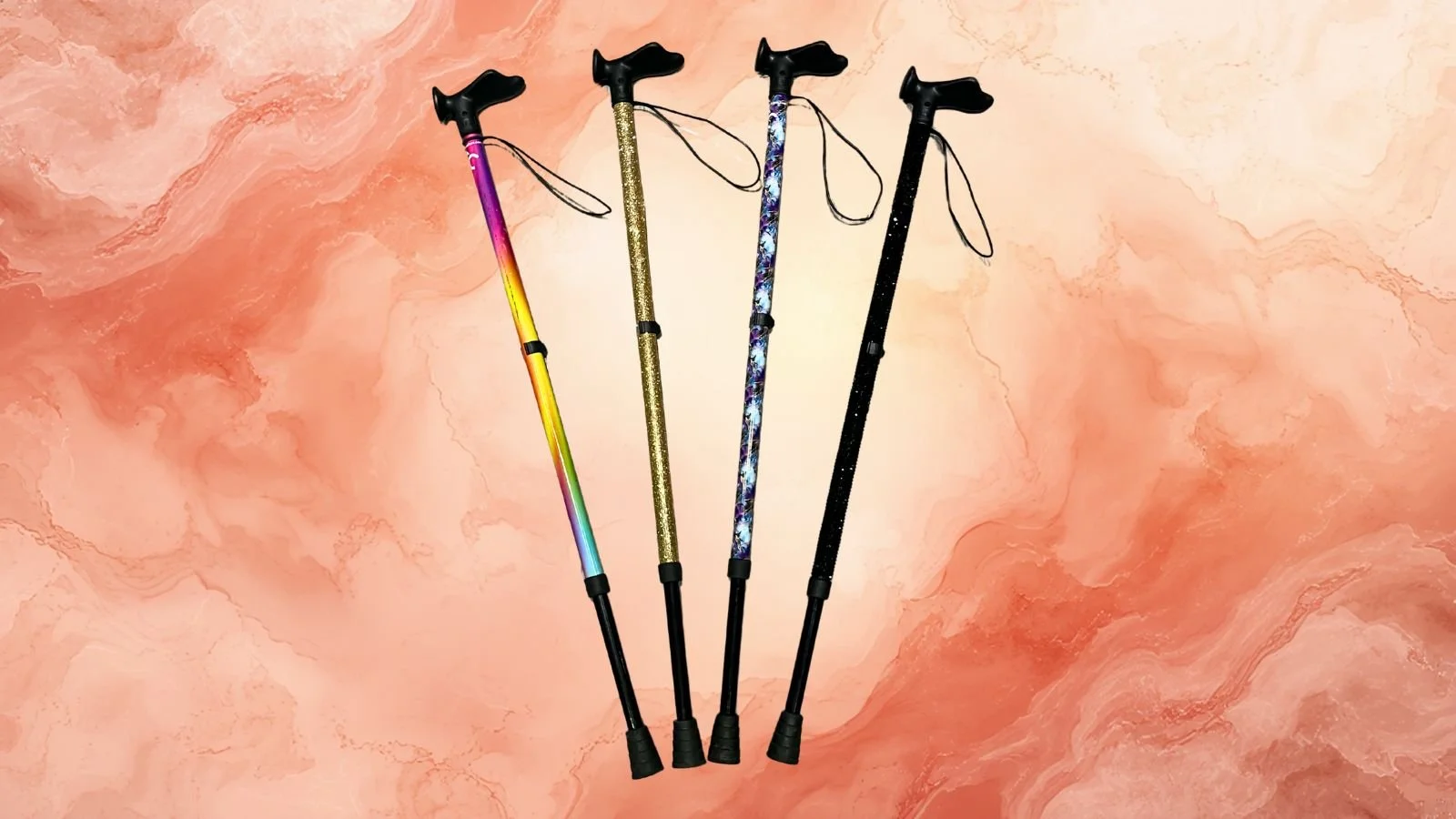
My colorful and comfortable walking sticks from Cool Crutches, pictured, are an extension of my style. Photo: Living In Pain
There are many affordable, compact, fit-in-your-handbag walking sticks out there. And after trying a few and finding them uncomfortable and sore on my hands, I tried Cool Crutches, available at Amazon.
Firstly, they don’t look like a medical device issued in stainless steel and blue and white. Apart from the dozens of gorgeous designs available to choose from, you can also upload your own print or graphic to be wrapped onto your stick.
Each one is adjustable easily for height and comfort, which is brilliant for the days I need more ankle support and wear my high-top platform Converse, and the days I need less pressure on the top of my torn foot ligaments, when I switch to my RocketDog trainers, which have a wide toe box. These Cool Crutch walking sticks (which I have reviewed and rated 5 stars) also have a non-slip foot.
The handle, however, is the biggest winner for me. They are ergonomically designed to avoid blisters on your palm, and made from a wide, smooth, but non-slip material that is so comfortable, you don’t even notice any texture or temperature.
And even for someone like me, who gets pain in my wrist from simply putting pen to paper and writing a birthday card, I do not experience the same wrist or forearm pain with this handle that I have had with other cheaper sticks.
The wrist strap is also a great practical addition, and highly durable, so if you are out and about and need to use your walking stick hand to open a door or get your purse to pay for something, it’s just hanging on your wrist and won’t go clattering about.
If you are disabled or have a long-term health condition, you may be eligible to purchase it VAT-free, which can reduce the cost by 20%.
I loved my first one so much - a pretty blue swirly water marble number that I still use daily - that I immediately got back onto Cool Crutches’ website and ordered a glittery gold one. I also signed up for their newsletter and waited for their next sale to drop, where I immediately snapped up a spectacular limited edition 3D shimmering black one for evenings out, and a rainbow one that my young daughter adores.
Between them, I always have a walking stick that is not just comfortable and vital for my ease of movement, but also matches my outfits and works as much as my handbag does to reflect my personal sense of style.
When I went for a job interview in 2023, I took my gold one and the lady who was interviewing me, and went on to be my line manager, remarked on how fabulous it was. My reply was, ‘If I have to use one, it may as well be glittery and gorgeous.’
I stand by that sentiment. If you’re overdue for a walking stick, bite the bullet and go for a gorgeous one that feels very much like you and helps make daily life that bit easier. I was 36 when I got my first, and honestly, I would have used one a decade earlier if I had simply got out of my own way.
Where to shop:
Cool Crutches directly or via Amazon.
Other crutches from different brands are available affordably on Amazon. Look for a minimum star rating of 4.5/5 and read the product descriptions to look for ergonomic features that suit your needs.
3. A Comfortable Wheelchair to Call My Own
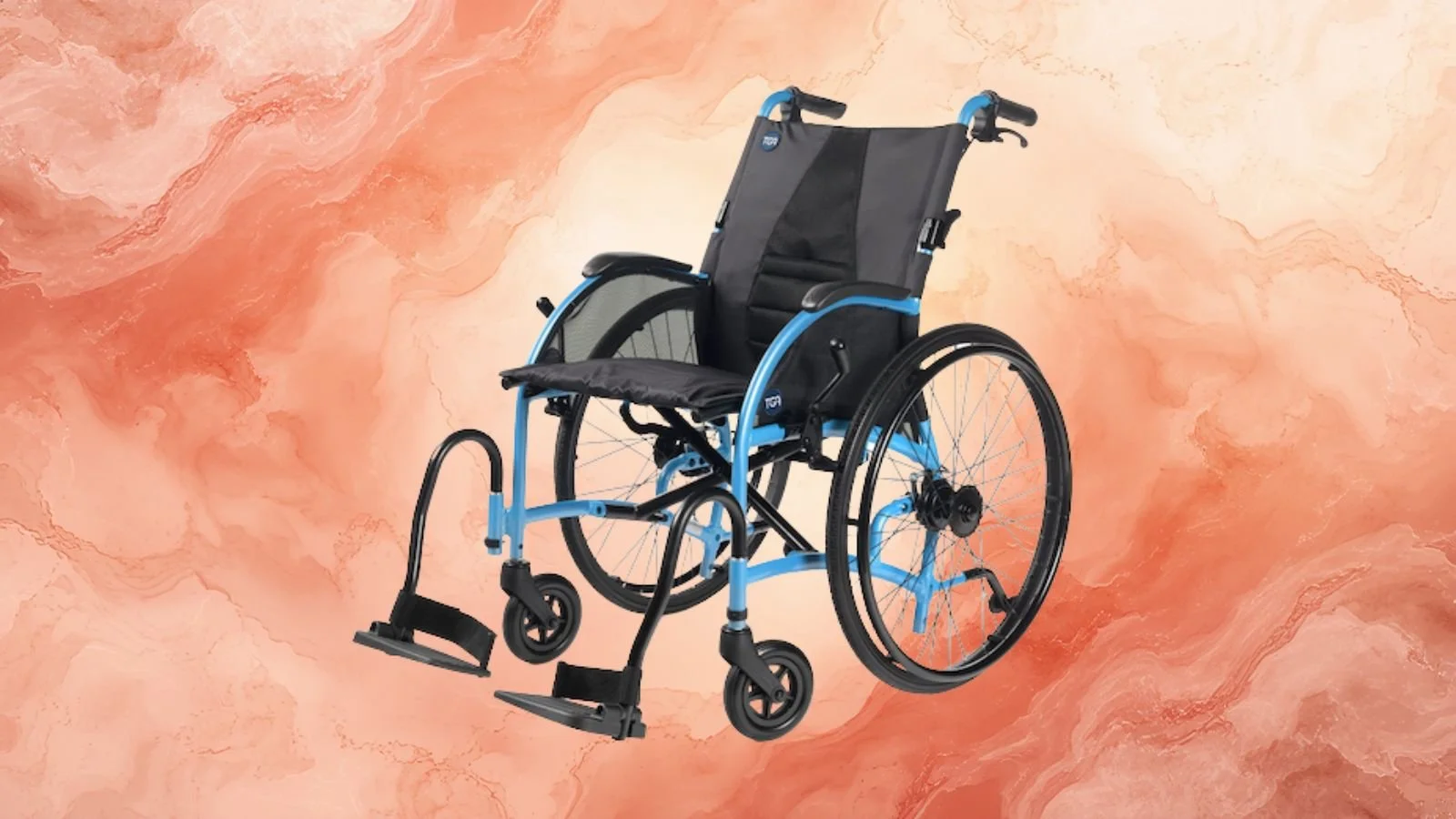
Last summer, I bought the TGA Strongback Self-Propelled Wheelchair, pictured, which has opened up the world again for me. Photo: Living In Pain/ TGA Mobility
For years, I have shopped online to avoid having to stand in a queue or walk further than I can manage without injury. But it made my world very small, and I found myself staying home for weeks at a time.
I missed being able to go Christmas shopping with my husband and daughter when all the twinkly lights were up, or simply mooch around the shops on a weekend.
So last summer, I went to my local branch of TGA Mobility, which sells wheelchairs, and I tried a few to see what worked best for me. They had dozens available to test, so I could assess comfort and fit with the experts in the store.
Though I would have liked an electric one for extra independence, it was outside my budget at the time. Instead, I chose a self-propelled TGA model, pictured above, with an adjustable back so I could recline slightly and reduce the sitting pressure and therefore pain in my hip, which had been a constant issue with public-hire wheelchairs from shopping centres, airports or arena events.
It set me back nearly £500 but has given me so many priceless experiences. We’ve been able to take our daughter to Cadbury World, have days out at the park, go Christmas shopping, and trips abroad - all without a time limit on my tolerance to be there, or days bedridden afterwards from fatigue and pain.
Those little trips out with my family have also made me feel confident as an ambulatory wheelchair user, as I had previously worried about the psychological impact on me and how others might treat me.
My worries were unfounded. The overwhelming majority of strangers I encounter in public when using my wheelchair are kind, patient, helpful and gracious. So, this year alone, we have been to a concert in Manchester, taken a trip to Spain, and are seeing a musician in concert in London, giving my family and me access to experiences and memories we will cherish forever.
Getting my first wheelchair has helped me start really living again, which was exactly what a fellow chronic pain patient at my local NHS pain clinic told me would happen. In a spur-of-the-moment heart-to-heart as we awaited our lidocaine infusions, she told me, ‘Get the wheelchair and live your life. Go out with your little girl and start having holidays and fun again.’
That advice really struck a chord, because she was absolutely right. With that kind stranger’s encouragement, I took the plunge, and I’m so pleased I did myself this enormous favour. My wheelchair is now customised with my trusty ergonomic hip cushion, side bag for my goodies, a cup holder and a wheelchair rucksack, all from Amazon.
I wish I had got one years ago.
Where to start your shopping journey for a wheelchair:
TGA Mobility (online store and nationwide stores)
MobilityPlus (online store)
You can also pick up new, nearly new, refurbished and second-hand wheelchairs on eBay. Make sure to check seller ratings and read the product descriptions and return policies before committing to a sale.
Considering Buying a Mobility Aid? Here’s Where to Start:
Consider whether a walking stick, rollator, wheelchair or mobility scooter best suits your needs and environment. You can also talk to your GP if you can be referred to your local wheelchair service for a free NHS wheelchair. If you have PIP payments, you can exchange part of your monthly payment and lease a device from Motability that might otherwise be unaffordable.
If you start a new Motability car lease, there may be options to add a basic self-propelled model to your order, to be delivered with your new vehicle. It is worth checking what is currently available and what you’re eligible for.
For smaller budgets, local online marketplaces or community groups can be a good source of second-hand equipment. Always check the condition, be mindful of potential scams and your safety when buying items online or picking them up.
Visiting a mobility showroom can also be extremely helpful. Being able to try different chairs and features in person reduces guesswork and helps you find a better fit so that when you commit to the upfront cost, you already know that the device is comfortable and suitable for you. Consider also where you will store it at home when it’s not in use.
Motability holds events all around the country that allow you to explore adaptations for cars without having to purchase. I went to the one in Birmingham last year and it was so incredibly helpful. Find the nearest one for you at Motability Scheme Live.
Living In Pain is hard, but embracing the mobility aids that can help pave the path for a better quality of life, and more time spent doing what you want without physical penalties can feel like a game-changer.
Take it from me: having a mobility aid does not mean you have given up. These are vital tools that help you participate in life with less pain, risk of injury, fatigue or flares, and crucially, more freedom. Independence does not always mean doing everything unaided. Sometimes it means using the right support so your energy goes toward living well, not just surviving.
Next, delve into the clever things that can improve the quality of your life and help you cope with chronic pain.